How Do I Know If My Subfloor Is Ready for LVP?
Five tests you can run before LVP installation — flatness, moisture, cleanliness, structural soundness, and slope — with the exact numbers a pro uses.
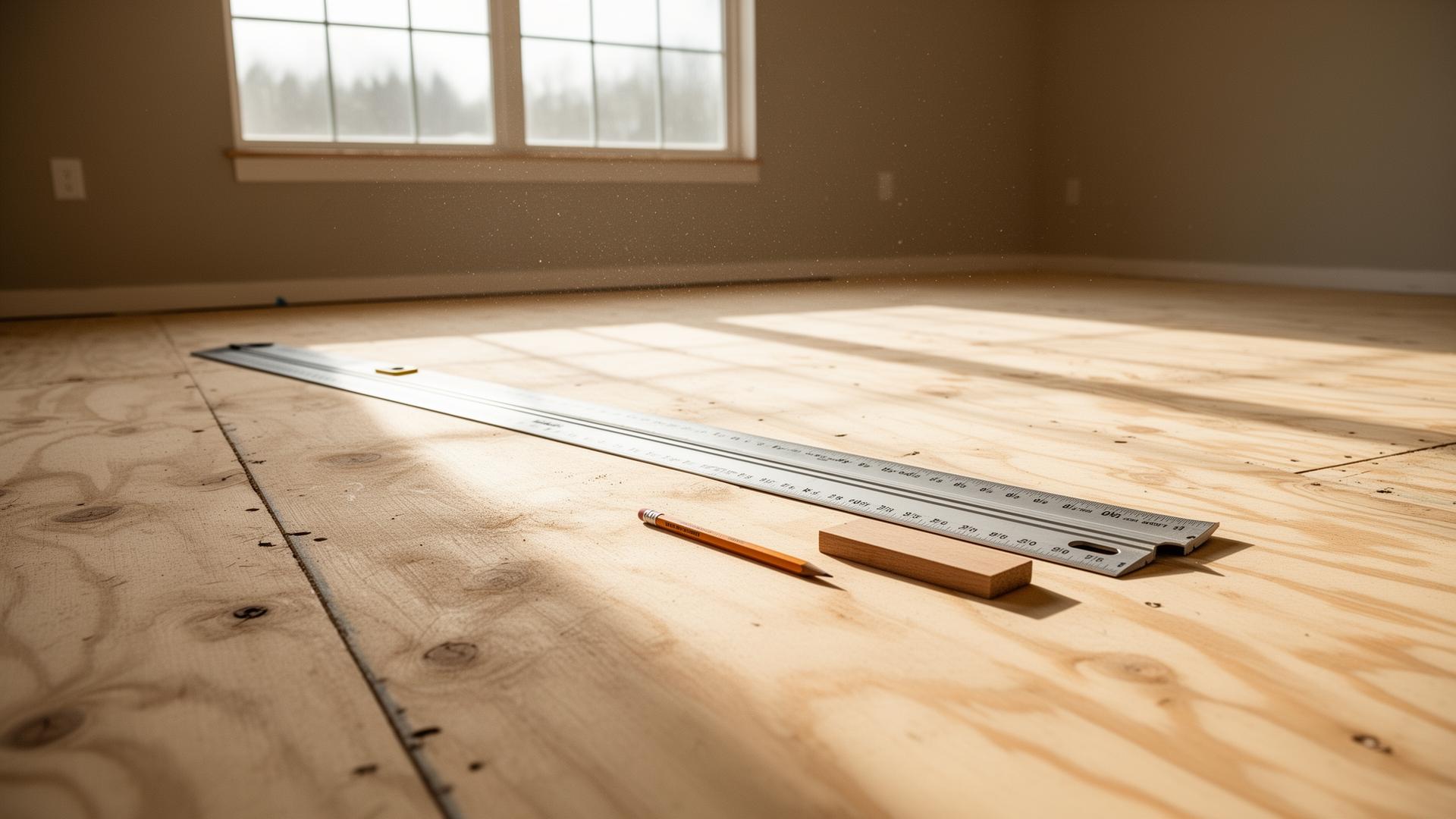
LVP is unforgiving of a bad subfloor. The plank itself is thin and flexible, so every dip, hump, damp spot, and squeak telegraphs through within months — sometimes within days. Most failed LVP installs aren''t a problem with the floor; they''re a problem with what''s underneath it. Before you sign a quote or pull the trigger on a DIY install, run these five tests. Each one is pass/fail with a number, so there''s no guessing.
Test 1: Flatness
This is the most common failure point. Lay a 10-foot aluminum straightedge on the subfloor in several spots — across, with, and diagonal to the joists. Slide a tape measure under the gap. The gap should be no more than 3/16" over 10 feet (or 1/8" over 6 feet) — that''s the spec almost every LVP manufacturer prints in their warranty.
Fixes: On plywood, sand down high spots and shim or skim low spots with floor patch. On concrete, grind humps and pour self-leveling compound in dips. Rough cost: $0.75–$2.50 per sq ft for self-leveler, plus prep labor.
Test 2: Moisture
Even in dry climates, concrete slabs hold and release moisture for years. Vinyl can trap that vapor against the subfloor and cause cupping, mold, or adhesive failure. You need a real number, not a guess:
- Concrete slabs: in-situ relative humidity probe (ASTM F2170) should read ≤ 75% RH, or a calcium chloride test (ASTM F1869) should read ≤ 3 lb / 1000 sq ft / 24 hr. Test at least one spot per 1,000 sq ft.
- Plywood/OSB: a pin moisture meter should read ≤ 12% moisture content, and the reading should be within 4% of any wood subfloor it sits on.
SoCal homeowners often assume slab moisture isn''t a problem because the air is dry. It is — slab-on-grade homes draw moisture up from the soil regardless of the indoor humidity. Always test.
Test 3: Cleanliness and adhesion
LVP needs a clean, sound surface to sit on (and floating LVP especially needs nothing under it that could create a high point). Sweep, then look for: drywall mud splatter, dried paint, old adhesive ridges, wax buildup, or loose grit.
Do the scrape test: drag a stiff putty knife across the floor at a 45° angle. If you lift flakes of paint, dried mud, or curls of old mastic, more prep is needed before the floor is install-ready. Anything you can scrape up will eventually telegraph through the plank or create a hollow spot.
Test 4: Structural soundness
Walk every room of the install area in socks. Listen and feel:
- Squeaks mean loose subfloor screws or nails. Re-screw every 6–8 inches along the joists before flooring goes down. Skipping this is the #1 reason a brand-new floor squeaks.
- Soft or spongy spots, especially near toilets, tubs, sinks, dishwashers, and exterior walls, mean possible rot or delamination. Cut a small inspection hole or pull a baseboard to confirm.
- Visible deflection at plywood seams of more than 1/8" under your weight means the subfloor isn''t adequately supported and needs blocking, additional screws, or a 1/4" underlayment layer.
Test 5: Slope
Set a marble or golf ball on the floor in several spots and let go. A tiny drift over a long distance is normal — homes settle. A noticeable, consistent roll across a whole room (more than about 1/4" of drop over 10 feet, or a marble that picks up speed) usually means structural settlement or a slab issue that needs investigation by a contractor or structural engineer before any flooring goes down. LVP will not fix a sloped floor; it''ll just make the slope obvious every time you walk on it.
The decision matrix
- Passed all 5: you''re ready. Standard install pricing should apply.
- Failed 1: fixable as part of normal prep. Expect a modest add to the quote (typically $0.50–$2/sq ft depending on the failure).
- Failed 2+: get the installer to scope prep separately and in writing before signing the install contract. Lumping prep into "we''ll handle it" is how surprise change orders happen mid-job.
Special cases worth flagging
Slab-on-grade in Southern California: ambient humidity is low, but slabs still off-gas moisture for years. A vapor barrier underlayment (6-mil poly or an attached pad with a barrier) is cheap insurance.
Upstairs plywood over an older subfloor: if the existing surface is 1/2" particleboard or worn underlayment, a fresh 1/4" plywood layer is often the easiest path to a passing flatness test.
Radiant heated floors: surface temperature must stay at or below 85°F. Higher temps soften the plank''s wear layer and void most LVP warranties.
How TRU handles this
Every TRU measurement visit includes all five tests with documented readings — flatness with a 10-ft straightedge, slab moisture with an RH probe, and structural soundness on every walked surface. We hand you the numbers in writing so any prep work in the quote is justified, not guessed. See our transparent prep pricing and book a measurement visit to get your subfloor scored against this checklist.
Related reading: How to prepare a subfloor for LVP installation · What to know before installing LVP · 10 common LVP installation mistakes · What''s included in a professional install
Know your flooring cost in 60 seconds.
Use our published rates to get an itemized estimate — no phone calls, no sales pressure.
Keep reading
All articles →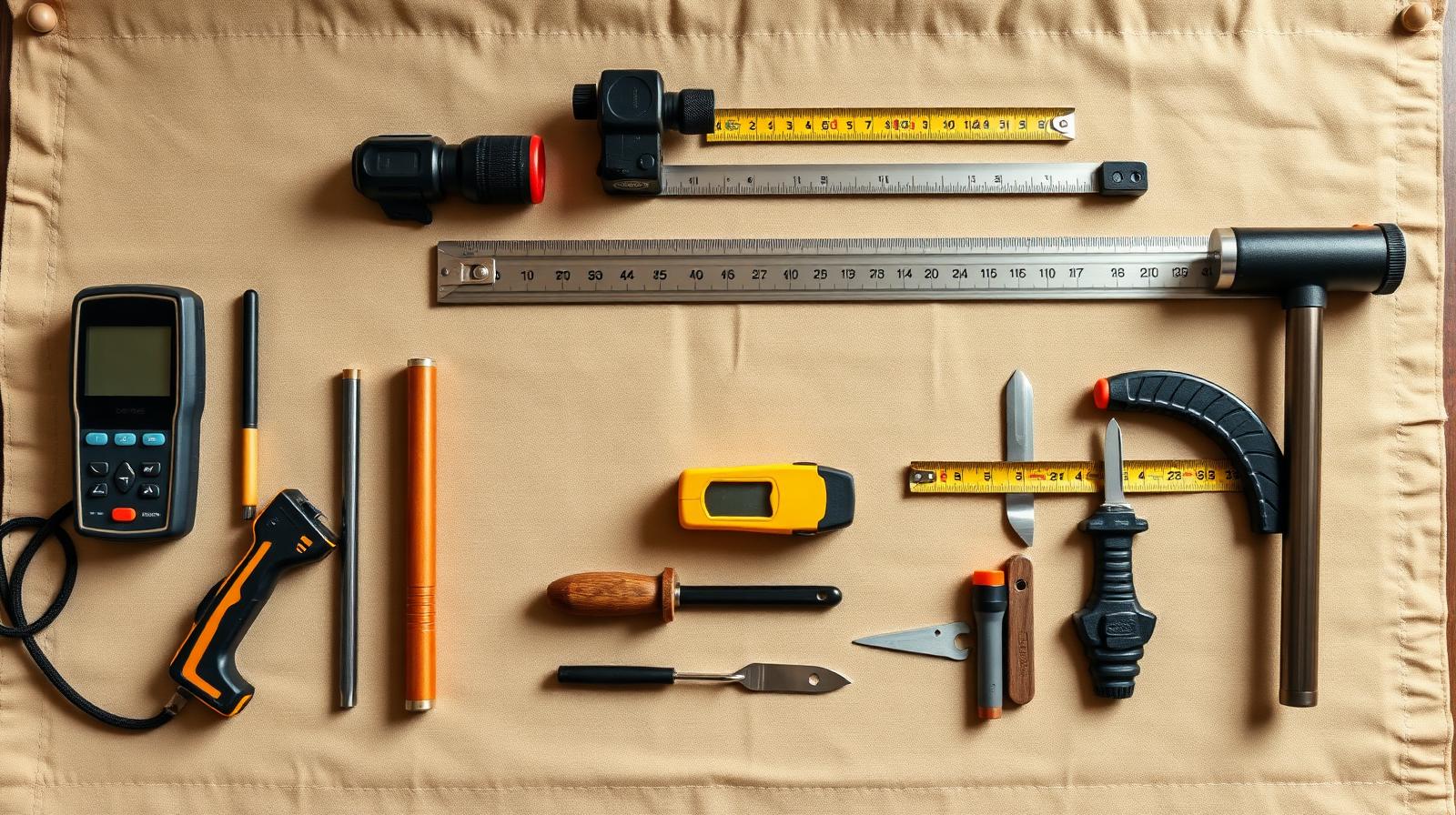
What Tools Do Professional LVP Installers Use?
The real toolkit pros bring to an LVP install — moisture meters, plank cutters, tapping blocks, undercut saws — and why each one matters for a floor that lasts.
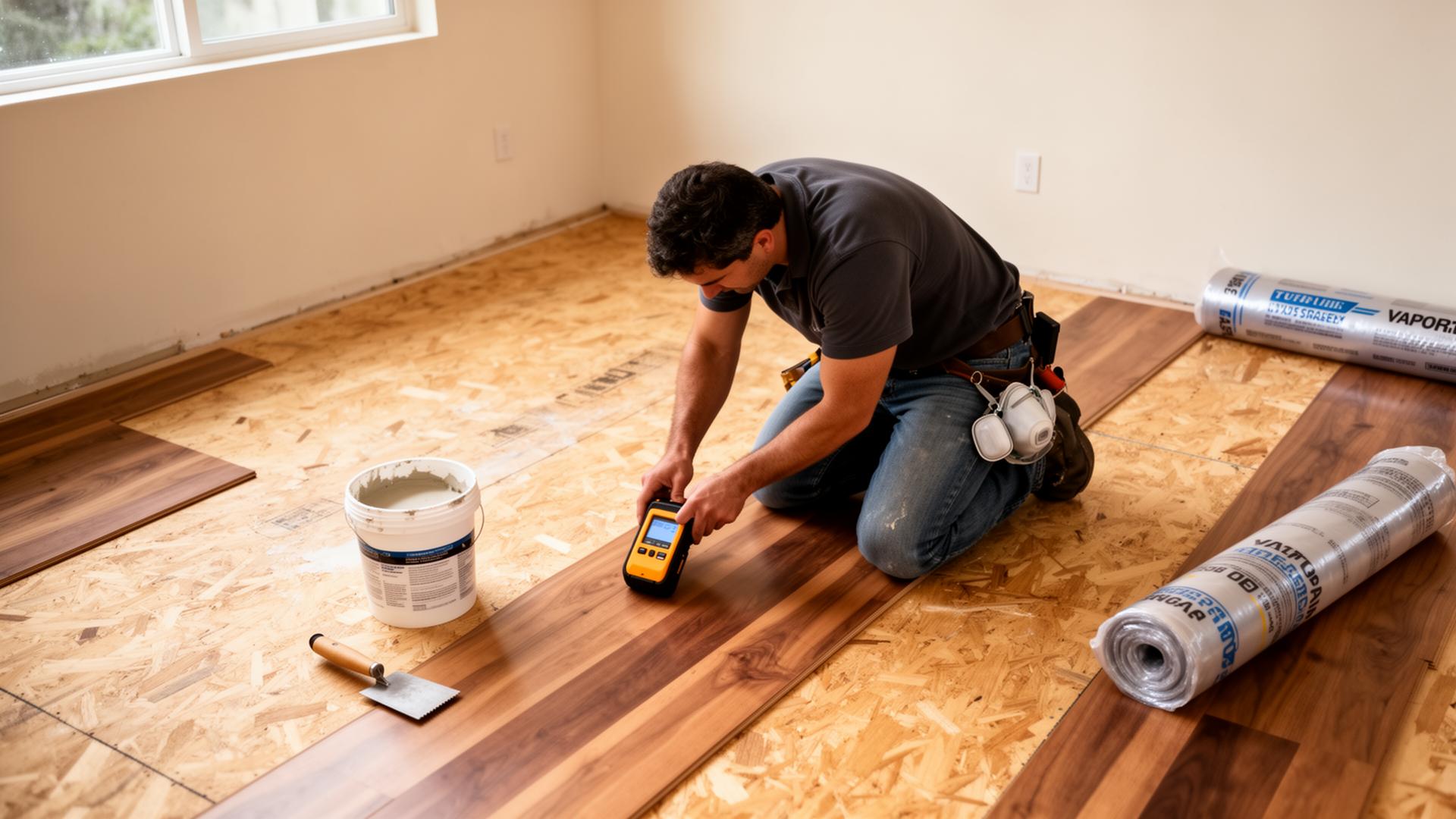
Why Is Subfloor Preparation So Important for LVP?
Skipping subfloor prep is the #1 reason LVP fails early. Here are the 5 failure modes — telegraphing, peaking, hollow spots, moisture damage, voided warranty — and the real cost of skipping it.
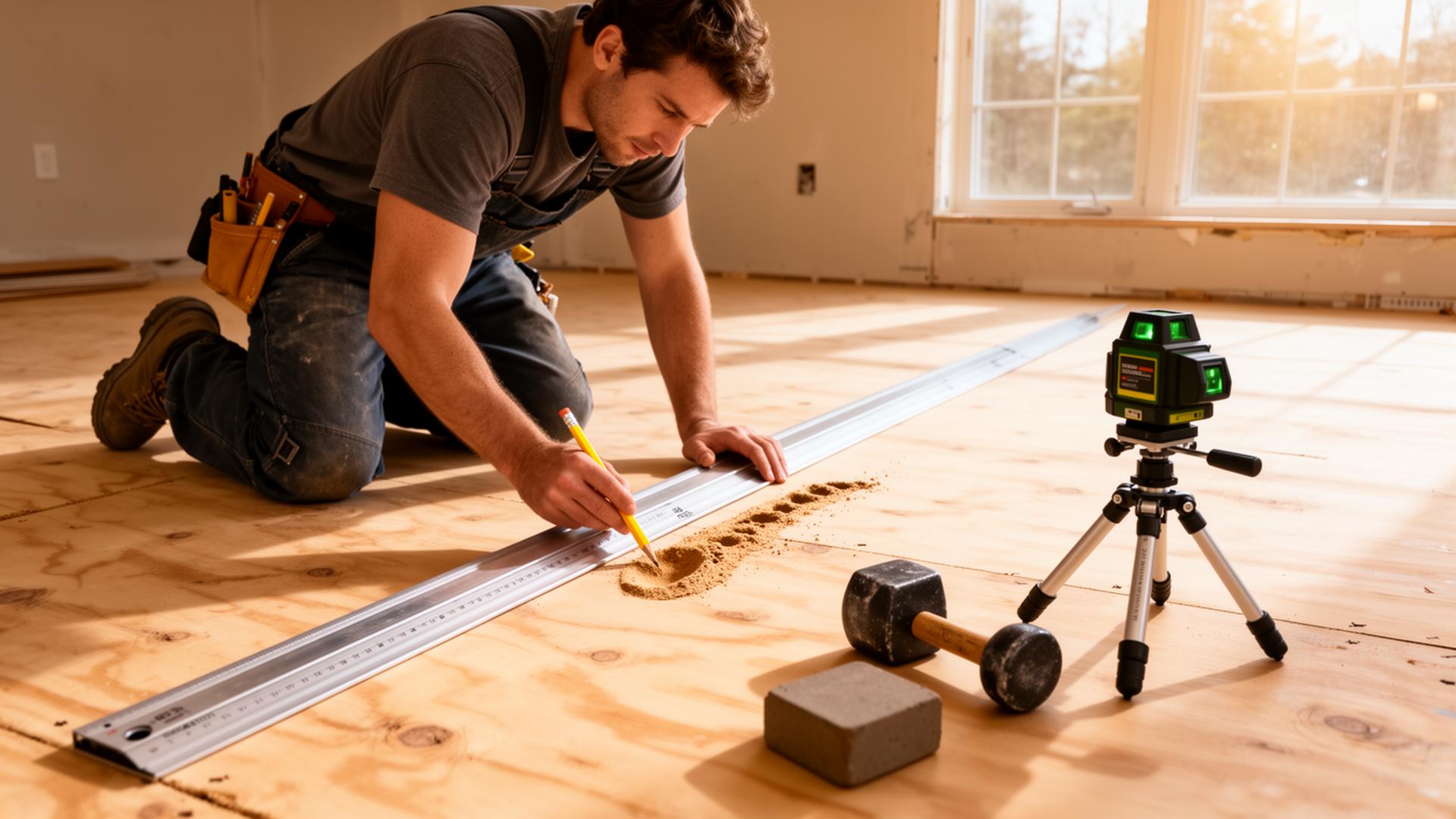
How Do Professional Installers Ensure LVP Planks Are Level?
The industry flatness tolerance for LVP, the tools pros use to find high and low spots, and the leveling techniques (grinding, patching, self-levelers) that keep your floor dead flat.