What Does a Professional Flooring Installation Include?
A clear scope-of-work guide: every step a real flooring install should cover, what is usually excluded, and how to compare quotes line by line.
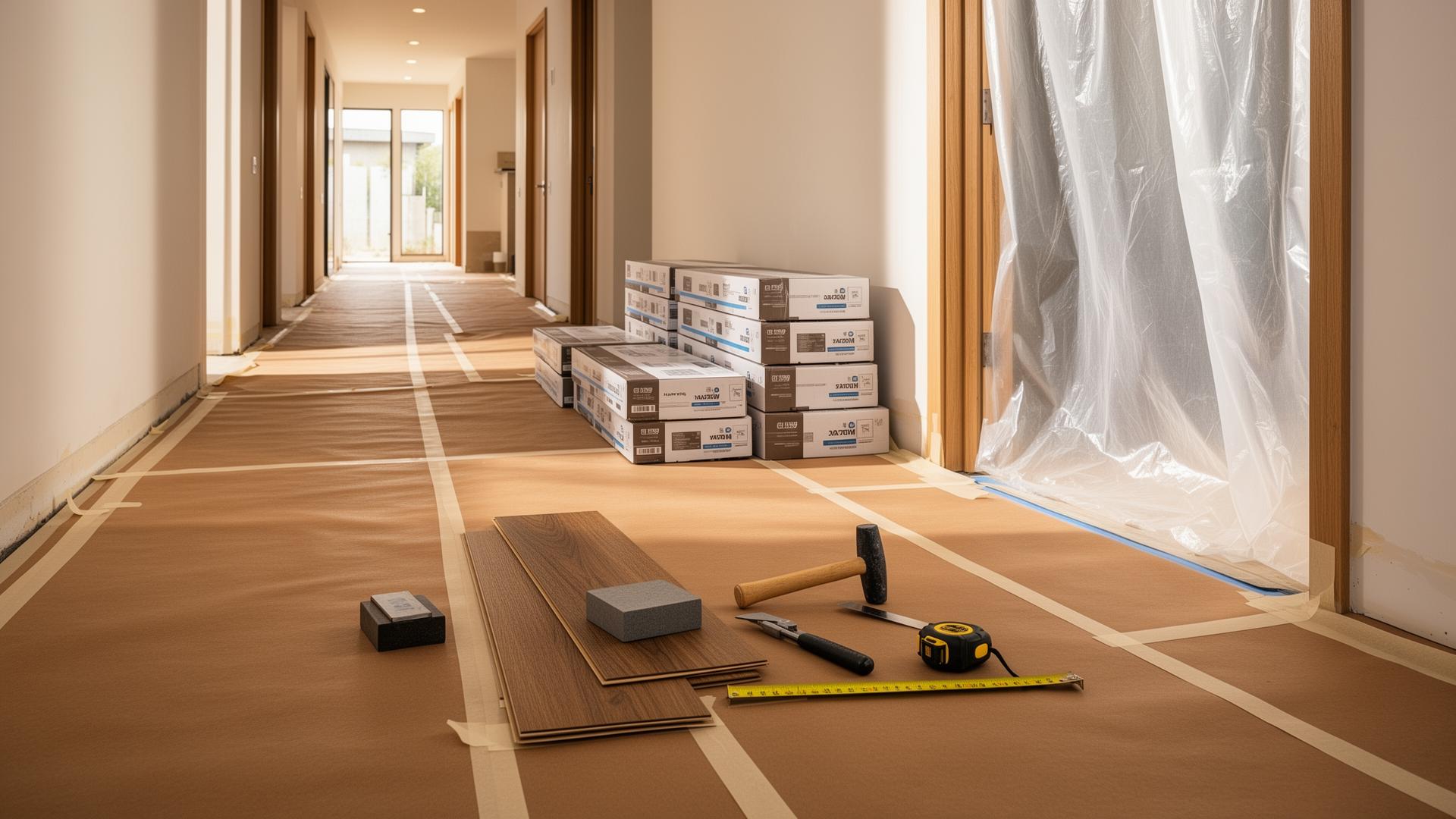
Two flooring quotes can look almost identical on the cover page and be thousands of dollars apart underneath. The difference isn''t usually the rate per square foot — it''s what each rate actually includes. Subfloor prep, baseboards, transitions, haul-away, warranty: each is either built into the price or waiting to show up later as a change order. This guide walks through what a complete professional installation should cover so you can compare quotes apples-to-apples and know exactly what you''re paying for.
The 8 things a complete install should include
1. Pre-install site walk and measurement verification
Before any flooring goes down, the installer should re-measure the rooms, confirm the material order, check the layout direction, and walk through the access path (stairs, elevators, parking for the crew). Skipping this is how jobs run short on material or end up with seams in awkward places. At TRU Installation, this is built into the measurement visit — we lock the scope before crews arrive.
2. Furniture moving and site protection
Standard installs include moving normal furniture out of the work area and protecting adjacent surfaces: rosin paper or breathable floor protection in hallways, plastic sheeting taped across doorways to contain dust, and corner guards on walls. Pianos, gun safes, pool tables, and full kitchens are typically extra — ask up front.
3. Removal and disposal of existing flooring
Tearing out the old floor is almost always a separate line item, not part of the base rate. A complete quote tells you the per-square-foot removal price by material (carpet, tile, glue-down vinyl, hardwood), and confirms that haul-away to a dump or transfer station is included. See why removal rates vary so much.
4. Subfloor prep
This is where corners get cut. Real prep means cleaning the slab or plywood, scraping residual adhesive, screwing down squeaky boards, checking flatness with a 10-foot straightedge, and applying self-leveling compound where the floor exceeds the manufacturer''s flatness spec (usually 3/16" in 10 feet for LVP). On concrete slabs, it also means a moisture reading. Our subfloor prep guide covers the full checklist.
5. Material acclimation and layout planning
Most flooring needs 24–72 hours on site to acclimate to your home''s temperature and humidity. A pro plans plank direction (usually parallel to the longest wall or the main light source), staggers seams at least 6–8 inches, and dry-lays the first few rows to avoid a sliver-width last row.
6. The install itself
This is the line item most people focus on, but it''s only one piece of the total. It covers cutting, fitting, click-locking or glue-down installation, tapping blocks (never hammers directly on planks), and proper expansion gaps around every fixed object — walls, cabinets, pipes, door jambs.
7. Transitions, thresholds, and trim
Where your new floor meets a different room, a different material, or a doorway, you need a transition strip: T-molding between like-height floors, a reducer to a lower floor, or a stair nose at landings. A complete quote lists every transition by location and material so nothing gets forgotten.
8. Baseboards, final cleanup, and haul-away
Baseboards can be reinstalled (carefully pried off before demo and put back), replaced with new, or left in place with shoe molding (quarter-round) added to cover the expansion gap. The quote should specify which. Final cleanup means vacuuming the new floor, removing protection paper, and hauling away all packaging and debris — not leaving cardboard stacks in your garage.
What''s usually not included
These are common change orders. Knowing them up front lets you decide whether to handle them yourself, hire them out separately, or add them to the quote:
- Toilet pull and reset (and new wax ring) for bathroom installs
- Door undercutting when a thicker floor won''t clear existing doors
- Appliance disconnect (fridge, dishwasher, washer/dryer)
- Asbestos testing or abatement on vinyl tile or mastic from pre-1985 homes
- Structural subfloor repair — rotted plywood, broken joists, severe slab cracks discovered after demo
- Painting or wall repair after baseboard removal
- Custom stair fabrication beyond a standard stair nose
- Underlayment upgrades for sound or moisture beyond the spec
The warranty layer
A real install has two warranties stacked on top of each other. The manufacturer warranty covers the material — finish wear, delamination, structural defects — typically 15–30 years for LVP and hardwood. The installer (labor) warranty covers the install itself: gapping seams, hollow spots, lifting planks. TRU backs labor for one year on every job. Ask any contractor in writing how long their labor warranty is and what voids it.
Your quick scope checklist
Bring this list to every quote meeting. Every "no" is a potential change order:
- Old flooring removal and disposal — included?
- Subfloor flatness check with a 10-ft straightedge — included?
- Self-leveler if needed — included up to how many bags?
- Moisture reading on concrete slabs — included?
- Underlayment — included and which type?
- All transitions listed by location?
- Baseboard removal/reinstall OR shoe molding — which, and included?
- Furniture moving — included for what items?
- Final cleanup and haul-away — included?
- Labor warranty length — in writing?
How TRU itemizes a quote
Most contractors give you one number. We give you a line-itemed quote: removal, prep, install, transitions, baseboards, and stairs each broken out at the rates published on our pricing page. You see exactly what each dollar buys, and if you want to handle one piece yourself — say, pulling the toilet — you can subtract that line. Book a measurement visit and we''ll walk you through the full scope before you commit.
Related reading: Should I get multiple quotes? · Questions to ask a flooring contractor · Buy materials yourself or have the installer supply?
Know your flooring cost in 60 seconds.
Use our published rates to get an itemized estimate — no phone calls, no sales pressure.
Keep reading
All articles →
How Much Does It Cost to Install Laminate vs LVP?
A side-by-side cost breakdown of laminate vs LVP — material, labor, and total installed price per square foot, plus which one actually saves money over 10 years.
How to Compare Flooring Installation Quotes: A Side-by-Side Guide
A step-by-step framework for lining up two or three flooring installation quotes side by side, normalizing line items, and picking the best value — not just the lowest price.
What's Included in an LVP Flooring Installation Quote?
A line-by-line breakdown of a real LVP installation quote — what each charge means, what should be itemized, and the omissions that signal change-order trouble ahead.