Can I Buy Flooring Materials Myself and Hire Someone to Install Them? (2026 Guide)
Yes — you can buy your own flooring and hire a pro to install it. Here is how labor-only installation works, when it saves money, and the 7 mistakes to avoid before you order.
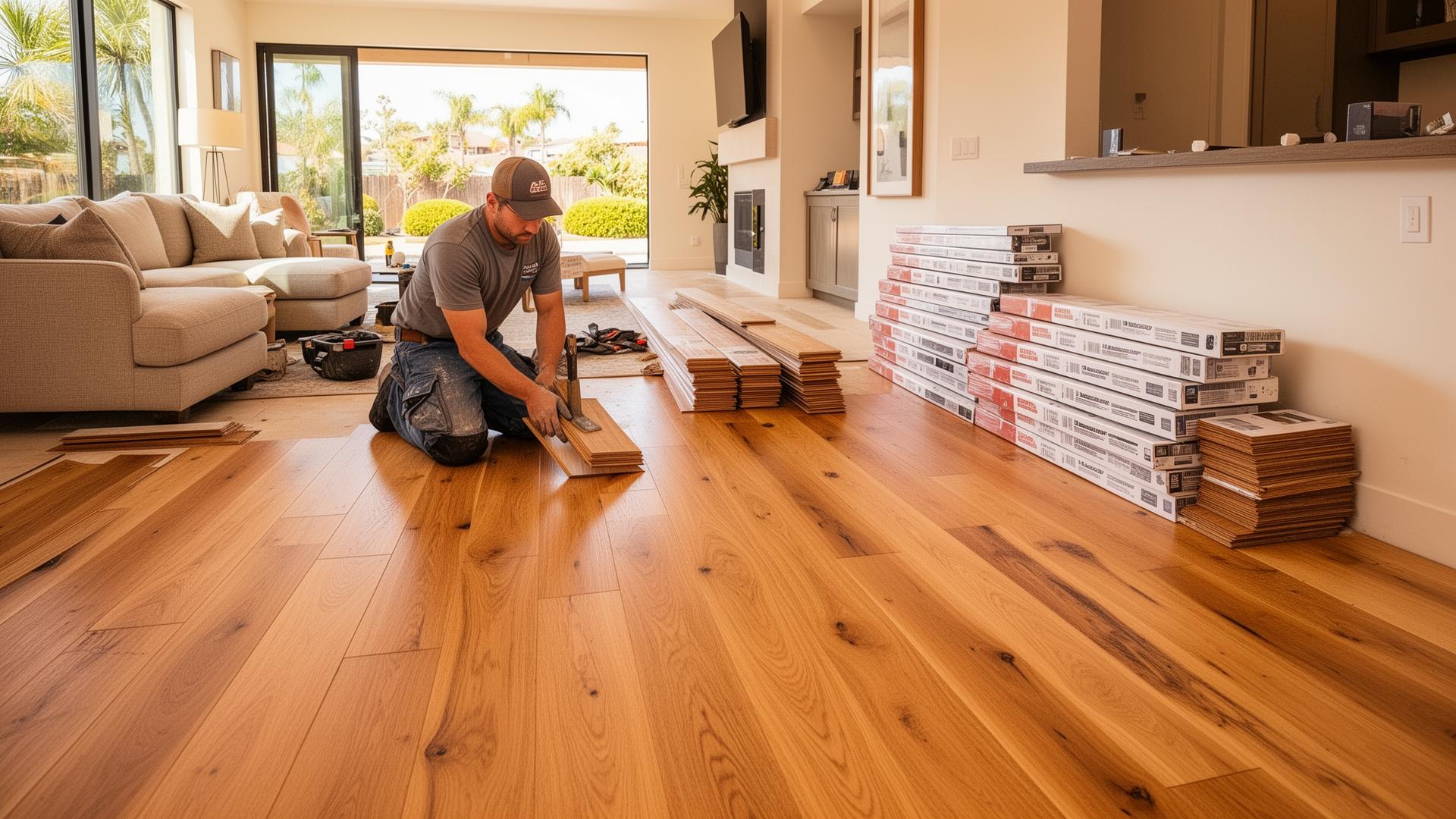
Short answer: Yes. You can absolutely buy your own flooring and hire a professional crew to install it. It is one of the most common ways homeowners save money on a flooring project — and at TRU Installation, customer-supplied jobs are a regular part of what we do. The catch: a few avoidable mistakes can wipe out every dollar you saved. This guide walks you through exactly how labor-only flooring installation works, when buying your own materials makes sense, when it backfires, and the 7-item checklist to get right before you swipe your card at Home Depot, Lowe’s, Floor & Decor, or any online supplier.
When buying your own flooring makes sense
Supplying your own materials gives you full control over brand, color, plank width, wear layer, and price. It can be a great move when:
- You caught a sale. Big-box stores and online suppliers run aggressive promotions on SPC, laminate, and engineered hardwood — sometimes 30–50% off MSRP. A contractor’s price won’t always beat a holiday sale.
- You want a specific designer SKU. If your designer specified a European white-oak engineered plank or a particular Cali Bamboo color, sourcing it yourself guarantees you get exactly that.
- You already have leftover boxes from the original install and want to extend the floor into another room with matching material.
- You’re upgrading builder-grade flooring. Many homeowners replace cheap builder carpet with mid-range SPC they bought directly, and only pay us for labor.
When it’s a bad idea
Sometimes the math doesn’t work — or worse, the project fails. Skip the DIY-buy if:
- You bought a no-name plank with an unfamiliar click-lock system the crew has never installed.
- You ordered exactly the square footage of your room with no waste factor (10% minimum for straight lay, 15% for diagonal, 20% for herringbone).
- The product has no manufacturer warranty registered in your name, or was sold “as-is” / clearance / open-box.
- You picked up boxes from different dye lots or run numbers, which causes visible color banding once installed.

How labor-only flooring installation pricing works
When you supply the material, you’re only paying for labor and any optional add-ons. At TRU Installation we publish our rates openly — no “call for a quote” runaround. You can see exact per-square-foot labor pricing and get an itemized total in 60 seconds using our instant estimate calculator.
A typical labor-only flooring quote includes:
- Base installation labor per square foot, priced by flooring type (hardwood, laminate, or SPC / luxury vinyl plank).
- Removal of existing flooring (carpet, tile, old vinyl, old hardwood) — priced per square foot of demo.
- Floor prep — leveling, skim-coat, moisture barrier where needed.
- Baseboards and quarter-round — remove-and-reinstall or new install.
- Stair installation — priced per stair tread because of the extra cuts and labor.
If you’re comparing options across material types, our flooring comparison guide breaks down durability, water resistance, lifespan, and install cost side-by-side.
The 7-item checklist before you buy
Before you load anything into your cart, work through this list. Getting any one of these wrong can cost you more than what you saved.
- Square footage + 10% waste. Measure length × width of every room, add 10% for straight-lay, 15% for diagonal, 20% for herringbone or chevron. Don’t round down.
- Transition pieces. T-moldings, reducers, end caps, and stair nose — one per doorway, one per flooring transition. Order matching SKUs at the same time; they often get discontinued.
- Underlayment. Some SPC has it pre-attached; some doesn’t. Laminate almost always needs separate underlayment. Engineered hardwood over concrete needs a vapor barrier.
- Moisture barrier. Required for any wood-based floor over concrete slab. Skip this in Southern California and you’ll get cupping within a year.
- Baseboards & quarter-round. Decide if you’re reusing existing or installing new. New baseboards mean paint and caulk after install.
- Acclimation time. Material must sit unopened in the install room for 48–72 hours before the crew arrives. Plan delivery accordingly.
- Delivery and storage. Most big-box stores will deliver, but they won’t carry pallets upstairs. Confirm your driveway/elevator/storage situation before scheduling.
Warranty reality — who’s responsible when something fails
This is the single most misunderstood part of customer-supplied jobs. There are two separate warranties, and they cover different things:
- Manufacturer warranty covers defects in the flooring itself — delamination, finish failure, structural cracks. This is between you and the manufacturer. Save your receipts and lot numbers. If a board fails in year three, you call the brand, not the installer.
- Installer workmanship warranty covers how the floor was installed — gaps that appear from skipped expansion gaps, hollow spots from skipped underlayment, transitions that fail. TRU Installation backs every job we do; if we caused it, we fix it.
The trap to avoid: most manufacturer warranties are voided if the floor was installed by anyone other than a licensed professional. Hiring a pro to install your customer-supplied flooring actually preserves the manufacturer warranty — doing it yourself often kills it.

Customer-supplied mistakes we see most often
- Wrong underlayment for SPC. SPC with pre-attached pad does not need a second foam layer — adding one voids the warranty and causes bounce.
- No expansion gap allowance. Floating floors need 1/4″ around every fixed object (walls, cabinets, pipes). Skip it and the floor buckles in summer.
- Mixed dye lots. Boxes bought across two trips, or from two stores, can have visibly different color tones. Buy all material in one transaction with sequential lot numbers.
- Damaged boxes accepted at delivery. Crushed corners mean tongue-and-groove damage inside. Inspect every pallet before signing.
- Ordering exact square footage. Zero waste factor + one bad cut = trip back to the store mid-install, which delays the crew and may incur a return-trip charge.
Hardwood vs laminate vs SPC — what’s safer to self-supply?
Not all flooring types are equally forgiving when you source them yourself:
- SPC / luxury vinyl plank: Easiest to self-supply. Click-lock, dimensionally stable, waterproof, forgiving of subfloor imperfections. Big-box stores carry strong inventory.
- Laminate: Easy. Similar click-lock to SPC but moisture-sensitive. Confirm underlayment requirements before ordering.
- Engineered hardwood: Medium. Quality varies dramatically. Stick to known brands and order through a flooring specialist, not a discount warehouse.
- Solid hardwood: Hardest to self-supply. Requires nail-down install, species-specific acclimation, and tight grade tolerances. A small board defect rate (normal) means you’ll need extra waste — 15% minimum.
What TRU Installation requires for customer-supplied jobs
We’ll happily install material you supplied. To keep your install on time and on budget, we ask for four things:
- Material on-site 48 hours before install day so it can acclimate.
- Boxes opened and counted — we’ll help, but quantity should be verified before the crew starts cutting.
- Written SKU confirmation — product name, lot number, and underlayment spec sent to us in advance so we can verify compatibility.
- All transitions, trim, and underlayment on-site. We don’t want to pause mid-install to wait on a $40 stair nose.
We don’t charge a surcharge for customer-supplied jobs. Our labor rate is the same whether you bought your flooring from us or from Floor & Decor.
The bottom line
Buying your own flooring and hiring a pro to install it is one of the smartest moves a homeowner can make — if you order correctly, give the material time to acclimate, and confirm warranty terms before install. TRU Installation publishes every labor rate online so you can plan your budget before you order a single box. Use the instant estimate calculator to see exactly what installation will cost, or book a professional measurement for a final-quote-ready number.
Know your flooring cost in 60 seconds.
Use our published rates to get an itemized estimate — no phone calls, no sales pressure.
Keep reading
All articles →
How Much Does It Cost to Install Laminate vs LVP?
A side-by-side cost breakdown of laminate vs LVP — material, labor, and total installed price per square foot, plus which one actually saves money over 10 years.
How to Compare Flooring Installation Quotes: A Side-by-Side Guide
A step-by-step framework for lining up two or three flooring installation quotes side by side, normalizing line items, and picking the best value — not just the lowest price.
What's Included in an LVP Flooring Installation Quote?
A line-by-line breakdown of a real LVP installation quote — what each charge means, what should be itemized, and the omissions that signal change-order trouble ahead.