Can I Install LVP Over My Existing Floor? (Tile, Wood, Concrete & More)
Wondering if you can install luxury vinyl plank over your existing tile, hardwood, laminate, vinyl, concrete, or carpet? This 2026 guide breaks down every surface — what works, what doesn't, and exactly what prep you need before laying a single plank.
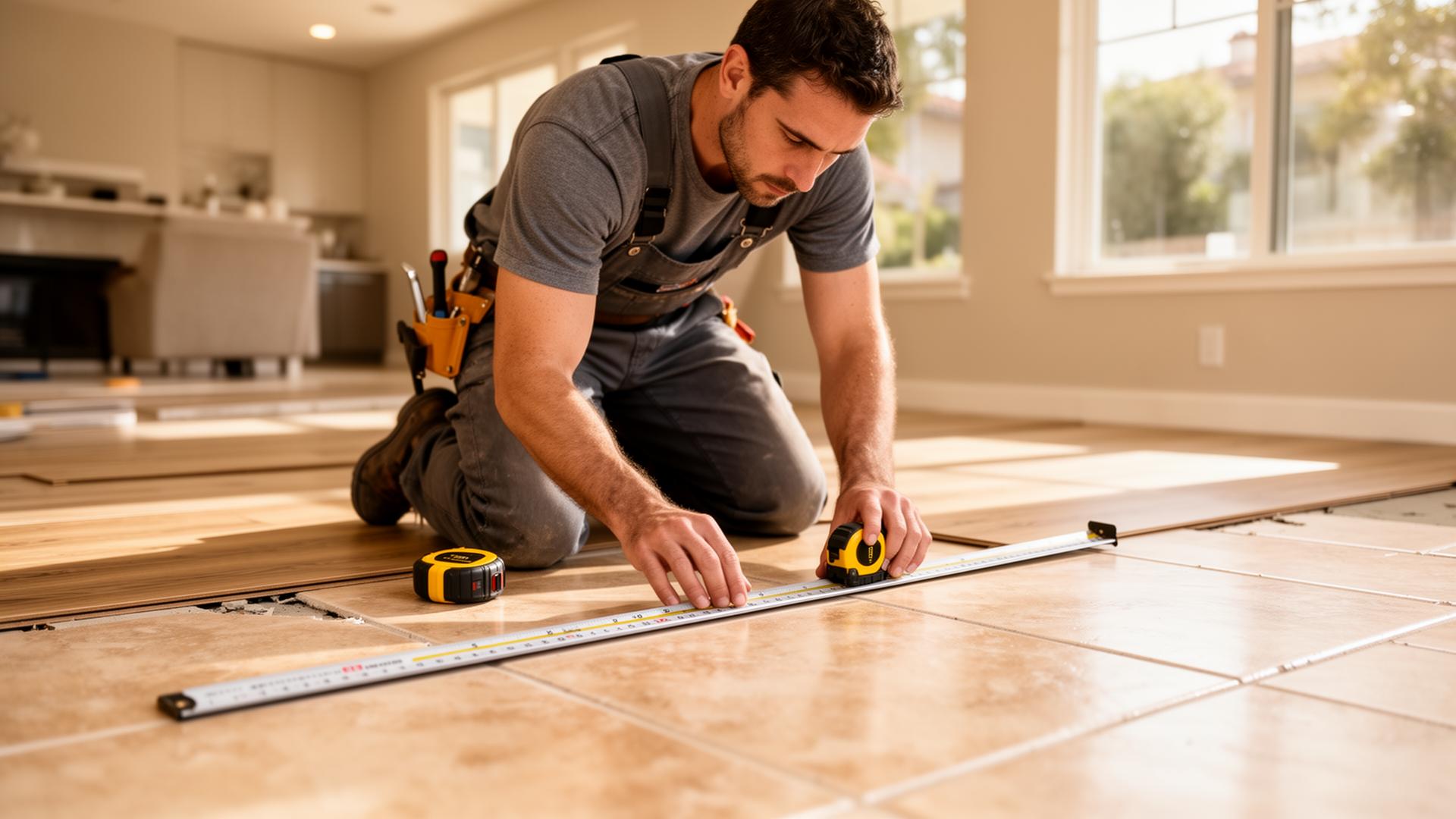
One of the most common questions we get from Southern California homeowners: "Can I just install LVP right over my existing floor?" The honest answer is sometimes yes, sometimes absolutely not — and getting it wrong can ruin a $4,000 floor in a single season.
Whether you can install luxury vinyl plank (LVP) over your existing flooring depends on three things: what the existing floor is, what condition it''s in, and how flat it is. This guide walks through every common surface and tells you exactly when LVP-over-existing works, when it doesn''t, and what prep you need.
The 3 Golden Rules (Before You Even Pick a Surface)
No matter what you''re installing over, these rules are non-negotiable:
- The existing floor must be flat. Industry standard is 3/16" of variation over a 10-foot span. Anything more and your LVP will flex, click joints will fail, and the warranty is void. (See our subfloor prep guide for how to check and fix this.)
- It must be structurally sound and fully bonded. Loose tiles, lifting vinyl, squeaky boards, or anything that moves underfoot has to be repaired or removed first.
- You must account for the new floor height. Adding 5–8mm of LVP on top of an existing floor can clash with door swings, dishwashers, refrigerators, and transitions to adjoining rooms.
If any of those three are a problem, the answer is "remove first" — not "install on top and hope."

Surface-by-Surface: Can You Install LVP Over It?
1. Over Ceramic or Porcelain Tile — Usually Yes
This is the most common scenario, and the good news is floating click-lock LVP installs beautifully over tile — provided the tile is sound and the grout lines aren''t too deep.
- Check first: Tap every tile with a coin. A hollow sound means a loose tile that needs to be re-bonded or removed.
- Grout line depth: If grout joints are wider than 1/8" or deeper than 1/16", you risk telegraphing — the grout pattern showing through your new LVP over time.
- Fix: Skim deep grout lines with a patching compound or use a 1/4" underlayment specifically rated for LVP-over-tile.
- Avoid: Glue-down LVP over tile. The bond is unreliable and the grout lines telegraph almost immediately.
2. Over Hardwood — Yes, If It''s Solid
Existing solid or engineered hardwood is generally an acceptable substrate for floating LVP, but only if:
- The boards are firmly fastened and don''t squeak or move
- There are no cupped, crowned, or warped planks (these signal moisture issues you need to fix first)
- Any protruding nails or staples are set flush or removed
- The floor is flat to the 3/16"-over-10ft standard
Important: If your hardwood is failing because of subfloor moisture, installing LVP on top will not fix it. The moisture will eventually reach the LVP and cause its own problems. Diagnose the cause first.
3. Over Laminate — Generally No
This is the one most homeowners get wrong. Laminate is already a floating floor. Installing another floating system (click-lock LVP) on top of it creates a "floor on a floor on a floor" — two independent layers shifting against each other. Joints fail, planks separate, and the warranty almost universally excludes this scenario.
Recommendation: Remove the laminate. It comes up fast (usually 30–60 minutes per room for a pro) and gives you a clean, predictable substrate.
Curious about how the two products actually compare? See laminate vs. LVP: what''s the difference?
4. Over Existing Vinyl or Linoleum — Yes, With Conditions
You can install LVP over old sheet vinyl or linoleum if:
- It is fully bonded to the subfloor (no bubbles, no peeling edges)
- It is not cushioned or "perimeter-glued" — soft, padded vinyl is too spongy and will cause failure
- There is no deep embossed texture that will telegraph through
- All wax, polish, and adhesive residue has been thoroughly cleaned off
Older-home warning: Vinyl flooring installed before the 1980s may contain asbestos. Don''t sand, scrape, or disturb it without testing — and if you''re unsure, leave the abatement to a licensed pro.
5. Over Concrete Slab — Yes, This Is Ideal
Concrete is one of the best substrates for LVP, but it''s also where most DIY installs fail. The two killers:
- Moisture. Concrete slabs (especially on-grade or below-grade) release moisture vapor. You must test using a calcium chloride test or RH probe. Most LVP manufacturers cap acceptable moisture at 3 lbs per 1,000 sq ft per 24 hours or 75% RH.
- Cracks and unevenness. Hairline cracks are usually fine. Cracks wider than 1/8" need to be filled with crack filler. Low spots get self-leveling compound; high spots get ground down.
For the full process, see our deep-dive on how to prep your subfloor for LVP installation.
6. Over Carpet — Never
This one is a hard no, no matter what TikTok says. Carpet and pad are too soft. Click joints will fail in weeks, the planks will flex and break, and there''s no manufacturer warranty on the planet that covers it. Always remove carpet and pad first.

The "Telegraphing" Problem (And Why It Voids Warranties)
Telegraphing is when imperfections in the substrate — grout lines, plank gaps, dips, ridges — gradually show through your new LVP as raised or sunken lines on the surface. It happens because LVP is thin (typically 5–8mm) and slightly flexible. Whatever is underneath, you''ll eventually see on top.
Prevention is straightforward:
- Use thicker SPC-core LVP (6.5mm+) over imperfect substrates
- Add a quality LVP-rated underlayment (foam or cork) to bridge minor imperfections
- Skim grout lines and seams with patching compound before installation
- When in doubt, self-level the entire floor
Height & Transition Math (Don''t Skip This)
If your existing floor is 1/2" thick and you add 1/4" of LVP plus underlayment, you''ve raised the floor by 1/4–3/8". That sounds small, but it affects:
- Doors: Interior doors may need to be trimmed at the bottom
- Door jambs: Need to be undercut so the LVP can slide underneath cleanly
- Transitions: The new floor will sit higher than carpet, tile, or wood in adjoining rooms — you''ll need a transition strip or reducer molding
- Appliances: Refrigerators, dishwashers, and washing machines may no longer slide out from under cabinets
- Cabinets and baseboards: The LVP doesn''t go under existing cabinets, but it may interfere with toe-kicks or appliance bays
Quick-Reference: LVP Over Existing Floors
| Existing Floor | LVP Over It? | Key Prep |
|---|---|---|
| Ceramic / Porcelain Tile | Yes | Re-bond loose tiles, skim deep grout lines |
| Solid or Engineered Hardwood | Yes, if sound | Fix squeaks, set nails flush, confirm flatness |
| Laminate | No (remove first) | Floating-on-floating fails — pull it up |
| Sheet Vinyl / Linoleum | Yes, if bonded & flat | Strip wax, fill embossed textures, test for asbestos if pre-1980s |
| Concrete Slab | Yes (best substrate) | Moisture test, fill cracks, self-level low spots |
| Carpet | Never | Remove carpet and pad completely |
| Plywood Subfloor | Yes | Secure loose panels, fill seams, sand high spots |
DIY or Hire a Pro?
Installing LVP over a clean, flat, sound existing floor is one of the more DIY-friendly flooring jobs out there — especially with click-lock floating systems. (See is LVP easy to install yourself?)
But here''s when you should bring in a pro:
- Your existing floor is uneven, cracked, or has unknown moisture issues
- You have transitions to multiple rooms or stairs
- You''re unsure whether the existing floor can stay (especially pre-1980s vinyl, suspicious laminate, or anything that moves)
- The job is over 500 sq ft and you want a warranty that actually holds up
At TRU Installation, we evaluate your existing floor as part of every measurement visit. We''ll tell you honestly whether we can install over it or whether we need to remove it first — and the price reflects which path makes sense. See our transparent pricing or compare your options with multiple quotes.
The Bottom Line
Yes, you can often install LVP over your existing floor — over tile, sound hardwood, well-bonded vinyl, or properly prepped concrete. You should never install it over carpet or laminate. And in every case, the existing floor must be flat, clean, and stable.
If you''re not sure what you''re dealing with, the safest first step is a professional measurement visit. We''ll inspect the existing floor, test for moisture if needed, and give you a written quote that covers any prep work — no surprise change-orders mid-job.
Book a Professional Measurement Visit See SPC / LVP Installation Services
Keep reading
Know your flooring cost in 60 seconds.
Use our published rates to get an itemized estimate — no phone calls, no sales pressure.
Keep reading
All articles →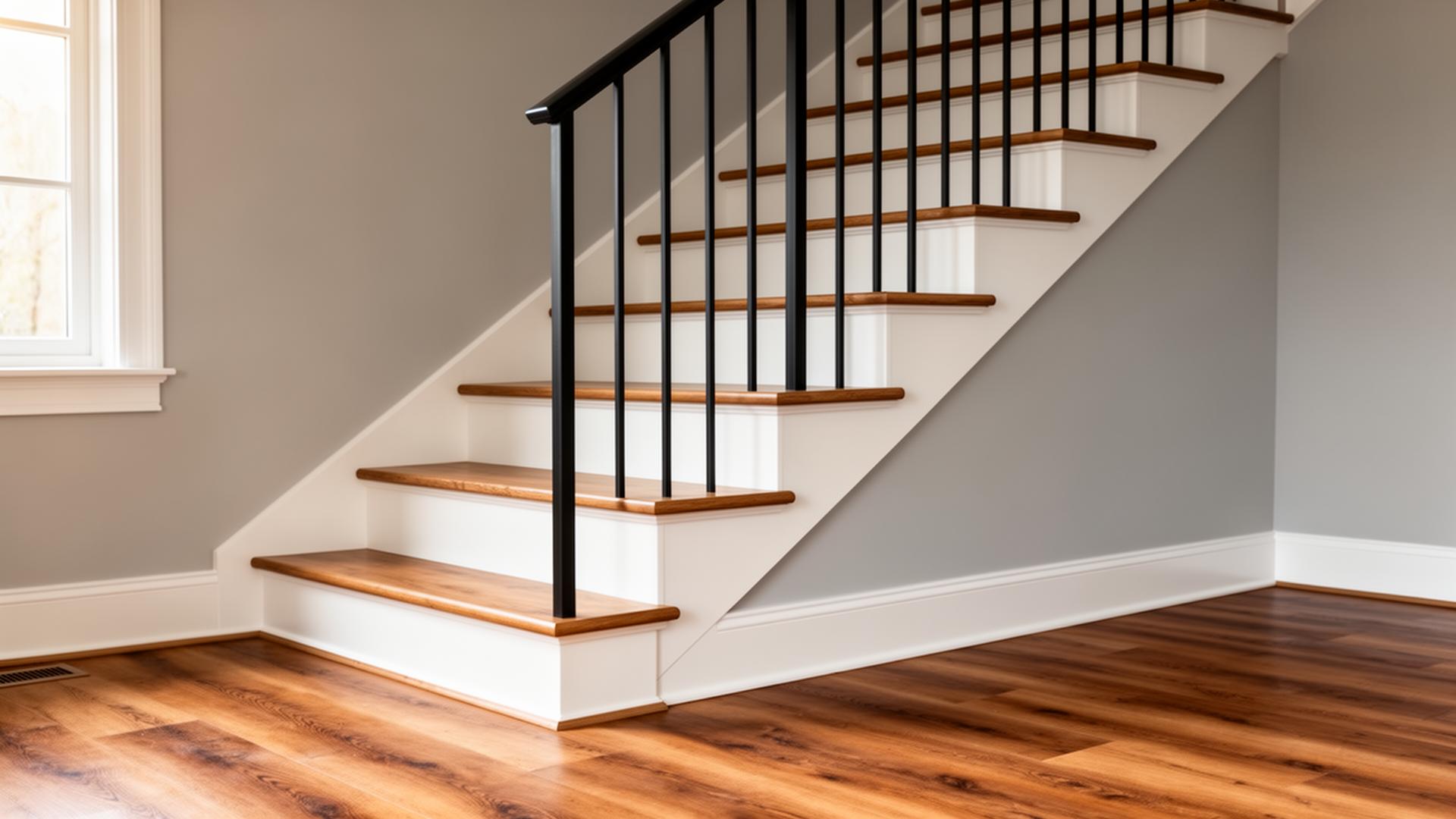
Can LVP Be Installed on Stairs?
Yes — LVP works on stairs, but it must be glued down, paired with matching stair-nose molding, and installed on a solid sub-tread. Here's what it really costs and what to watch out for.
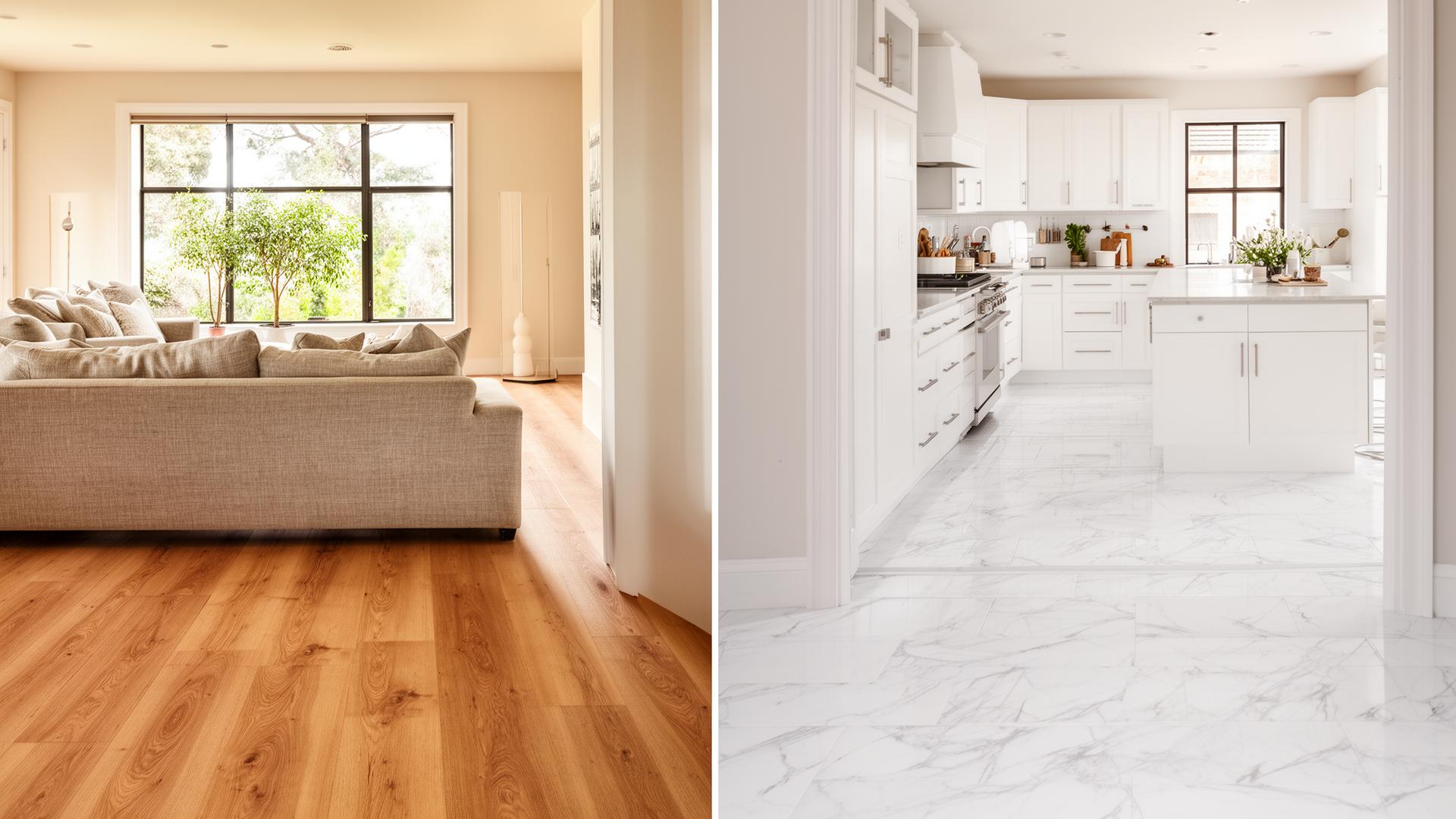
How Do I Choose Between Wood-Look and Stone-Look LVP?
A homeowner's decision guide for picking wood-look vs stone-look LVP — which visual works best in each room, what affects resale, and how to mix the two cleanly.
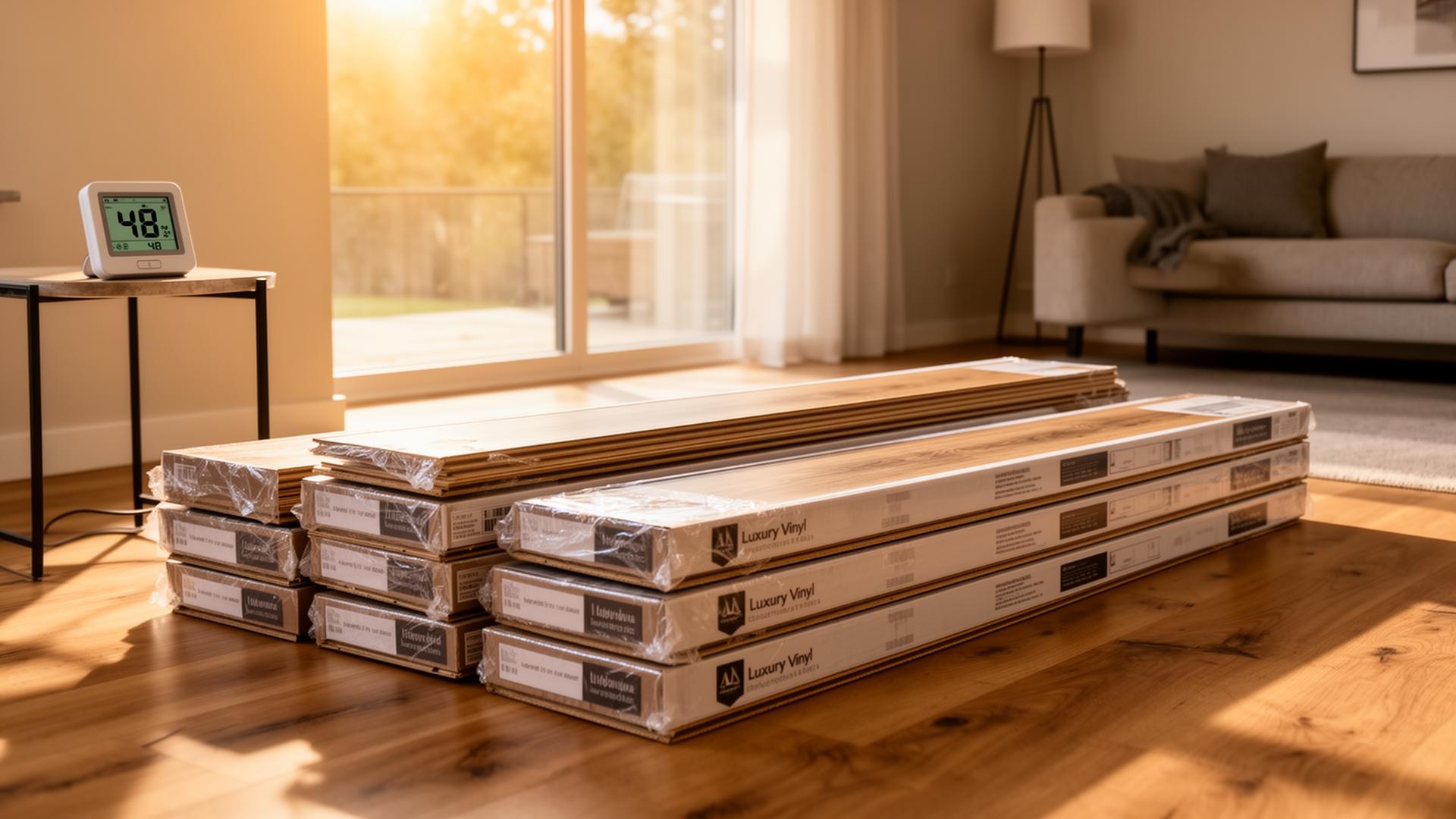
Should I Acclimate LVP Before Installation?
Yes — but not for the reasons you think. Here's what manufacturers actually require, how long acclimation takes, and what really happens if you skip it.