How Much Does LVP Flooring Installation Cost Per Square Foot? (2026 Pricing Guide)
LVP installation runs $1.50–$6.00 per sq ft for labor, plus $2.00–$7.00 per sq ft for materials. Here is what drives the price, an itemized 1,000 sq ft example, and how to lower your total.
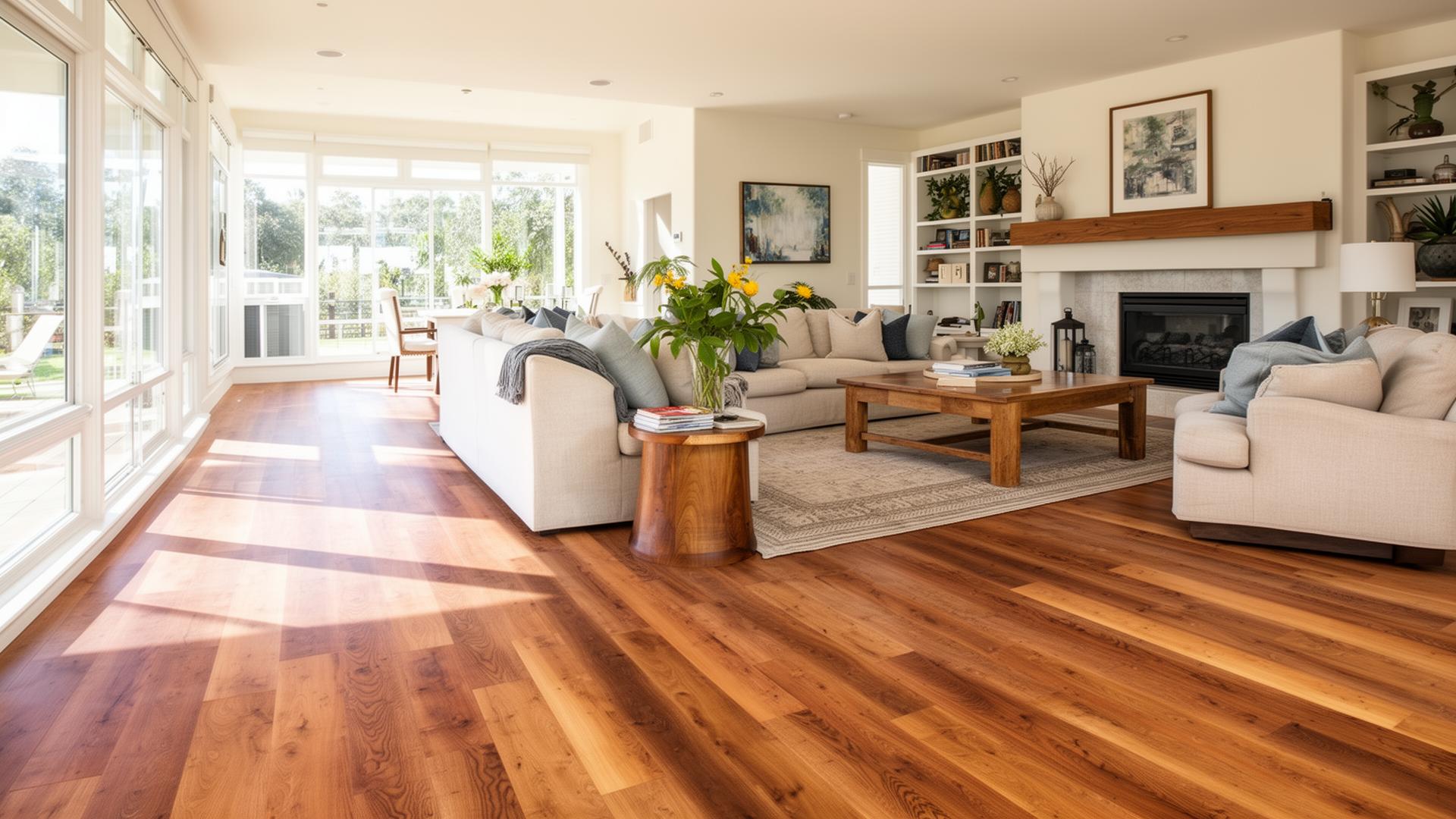
Short answer: Luxury vinyl plank (LVP) installation typically costs $1.50–$6.00 per square foot for labor only, plus $2.00–$7.00 per square foot for the material itself — for an all-in installed cost of roughly $3.50–$13.00 per square foot. Most Southern California homeowners land in the middle of that range. Below is the full breakdown: what’s included, what’s extra, the nine factors that move your number up or down, and a real itemized example for a 1,000 sq ft home.
2026 LVP installation pricing at a glance
Here are typical Los Angeles and Ventura County ranges, broken out line item by line item so you can build a realistic budget:
| Line item | Budget | Typical | Premium |
|---|---|---|---|
| LVP / SPC material (per sq ft) | $2.00–$2.99 | $3.00–$4.99 | $5.00–$7.00+ |
| Labor — floating click-lock install (per sq ft) | $1.50–$2.49 | $2.50–$3.99 | $4.00–$6.00+ |
| Remove existing carpet (per sq ft) | $0.50 | $0.75 | $1.25 |
| Remove existing tile (per sq ft) | $2.00 | $3.50 | $5.00+ |
| Floor prep / leveling (per sq ft, as needed) | $0.50 | $1.25 | $2.50+ |
| Baseboards reinstall (per linear ft) | $1.50 | $2.50 | $4.00 |
| New baseboards installed (per linear ft) | $3.00 | $5.00 | $8.00+ |
| Quarter-round / shoe molding (per linear ft) | $1.50 | $2.25 | $3.50 |
| Stair tread install (per stair) | $45 | $75 | $120+ |
| All-in installed cost (per sq ft) | $3.50 | $6.50–$8.50 | $13.00+ |
Want exact numbers for your project? Our instant estimate calculator uses live published rates — enter your square footage and add-ons and you get an itemized total in 60 seconds. No phone calls.

What’s included in standard LVP installation labor
When a flooring contractor quotes you a per-square-foot install rate for SPC / luxury vinyl plank installation, that number generally includes:
- Pre-install layout — planning plank direction, starter row, seam stagger, and finish row width.
- All cuts — straight cuts, scribed cuts around door jambs, vents, and irregular walls.
- Click-lock assembly — the actual install, tapping planks into the locking mechanism without damaging the edges.
- Expansion gaps — 1/4″ perimeter spacing required by every manufacturer warranty.
- Transitions at doorways and flooring changes (you supply the matching T-molding or reducer).
- Basic dust control — vacuuming as the crew works.
- Haul-away of install scrap — offcuts and empty boxes from the actual install.
What’s NOT included (and adds to your bill)
Most homeowners get surprised by add-ons because they assumed the base rate covered everything. It doesn’t. Plan for these separately:
- Removal of existing flooring — carpet, tile, hardwood, or old vinyl. Tile demo is the most expensive (cement-board can triple the cost).
- Subfloor prep — leveling compound, patching, moisture mitigation. SPC tolerates more imperfection than hardwood, but anything more than 3/16″ deflection over 10 feet needs floating compound.
- Baseboards — remove-and-reinstall the existing ones, or install new (with paint and caulk after).
- Quarter-round / shoe molding — the small trim that hides expansion gaps when you reuse baseboards.
- Stairs — priced per tread because of the extra cuts, stair nose installation, and labor risk. Always a separate line item.
- Furniture moving — most installers will move some light furniture as a courtesy; pianos, fish tanks, and appliances are extra or excluded.
- Second-floor or elevator-only access — carrying pallets up stairs or paying freight-elevator fees in condos.
- Underlayment — usually included in mid-range SPC. If your material doesn’t have attached pad, budget another $0.30–$0.60/sq ft.
9 factors that change your final price
- Room size. Larger rooms cost less per square foot. A 1,500 sq ft job is usually cheaper per sq ft than a 200 sq ft bathroom because setup time is fixed.
- Layout complexity. Open rectangles install fast. Hallways, closets, and odd-angle rooms add cuts and waste.
- Plank width. Wider planks (7″+) cover area faster but show subfloor imperfections more, often requiring extra leveling.
- Install pattern. Straight-lay is the baseline. Diagonal adds ~15%. Herringbone or chevron easily doubles labor.
- Subfloor condition. Concrete slabs in older Southern California homes often need grinding or leveling. Plywood subfloors need to be screwed flat.
- Number of doorways and transitions. Every doorway = a cut, a transition strip, and time.
- Stairs. The single biggest add-on. A 14-tread staircase can add $1,000–$1,700.
- Access. Ground-floor with driveway delivery is cheapest. Third-floor walk-up condos cost more — sometimes a lot more.
- Demo type. Carpet pull-up is cheap. Tile demo with thinset on concrete is the most expensive removal in residential.
LVP, SPC, WPC — what’s the difference for cost?
You’ll see all three acronyms quoted. Quick translation:
- LVP (Luxury Vinyl Plank) is the umbrella category — any rigid or flexible vinyl plank that looks like wood.
- SPC (Stone Polymer Composite) is the most popular LVP subtype today. Rigid core, waterproof, dimensionally stable. This is what most people actually mean when they say “LVP.”
- WPC (Wood Polymer Composite) is softer and warmer underfoot but less durable. Slightly cheaper material, same install labor.
Installation labor is essentially identical across the three. Material cost varies: builder-grade WPC starts around $2/sq ft, mid-range SPC sits at $3–$5, and premium SPC with thick wear layers and extra-wide planks runs $5–$7+.

Real example: 1,000 sq ft Southern California home
Here’s what a typical Los Angeles or Ventura County install looks like — carpet removal in the living areas, mid-range SPC, baseboards reinstalled, no stairs:
| Line item | Quantity | Rate | Subtotal |
|---|---|---|---|
| Mid-range SPC material (with 10% waste) | 1,100 sq ft | $3.50 | $3,850 |
| Floating LVP install labor | 1,000 sq ft | $3.00 | $3,000 |
| Carpet & pad removal + haul-away | 1,000 sq ft | $0.75 | $750 |
| Light floor prep (skim spots) | 1,000 sq ft | $0.50 | $500 |
| Baseboards: remove & reinstall | 200 linear ft | $2.50 | $500 |
| Quarter-round at doorways | 20 linear ft | $2.25 | $45 |
| Total installed cost | $8,645 | ||
| All-in per sq ft | $8.65 | ||
Drop to budget SPC and skip baseboards and the same job comes in closer to $5,500. Upgrade to premium plank, add stairs, and demo tile and you’re north of $14,000. Run the numbers for your specific footage with the instant calculator.
DIY vs pro install — the real math
LVP is one of the more DIY-friendly flooring types, but most homeowners underestimate the hidden costs. Here’s the honest comparison for a 1,000 sq ft install:
- Tool rental or purchase: $150–$300 (vinyl cutter, tapping block, pull bar, spacers, knee pads).
- Waste factor: Pros average 8–10% waste. First-time DIYers regularly hit 15–25%. On a $3,500 material order, that’s an extra $500–$875.
- Time: A two-person pro crew finishes 1,000 sq ft in 1–2 days. A first-time DIYer usually spends 4–7 weekends.
- Warranty risk: Most manufacturer warranties are voided if the floor isn’t installed to spec. Skip the expansion gap or use the wrong underlayment and you’ve forfeited the warranty.
Net: DIY usually saves $1,500–$3,000 on a 1,000 sq ft job — if everything goes right. When it doesn’t, the savings disappear fast.
How to lower your LVP installation cost
- Buy material yourself and hire a pro for labor only. See our guide on how labor-only flooring installation works — homeowners regularly save 10–25% with no warranty risk.
- Reuse existing baseboards. Remove-and-reinstall is roughly half the cost of new baseboards plus paint.
- Schedule single-day jobs. Bundling all rooms together is cheaper than splitting the install across multiple visits.
- Stick with straight-lay. Diagonal and herringbone look great but add 15–100% in labor.
- Pick standard plank widths. 6–7″ planks are the most cost-efficient. Extra-wide planks (9″+) need more leveling.
- Get the quote in writing with line items — not a single lump-sum number you can’t verify.
Red flags in a low LVP installation quote
- No written scope of work. If prep, transitions, and baseboards aren’t spelled out, expect change orders.
- “We’ll figure out prep on site.” Translation: surprise charge on install day.
- Cash-only, no contract. No accountability if the floor fails.
- No license or insurance. California requires a C-15 flooring license for jobs over $500. Verify on the CSLB website.
- Quote is dramatically lower than the rest. Either critical scope is missing, or the install will be rushed.
The bottom line
Budget $3.50–$13.00 per square foot all-in for LVP installation, depending on material grade, prep, removal, and add-ons. Most TRU Installation customers in Los Angeles and Ventura County land between $6.50 and $8.50 per square foot for a mid-range SPC install with carpet removal and reused baseboards. Run the math for your specific home in 60 seconds with our instant estimate calculator, or book a professional measurement visit for a final, ready-to-quote number.
Comparing LVP against other materials? Our flooring comparison guide stacks LVP against hardwood and laminate on cost, durability, water resistance, and lifespan.
Know your flooring cost in 60 seconds.
Use our published rates to get an itemized estimate — no phone calls, no sales pressure.
Keep reading
All articles →
How Much Does It Cost to Install Laminate vs LVP?
A side-by-side cost breakdown of laminate vs LVP — material, labor, and total installed price per square foot, plus which one actually saves money over 10 years.
How to Compare Flooring Installation Quotes: A Side-by-Side Guide
A step-by-step framework for lining up two or three flooring installation quotes side by side, normalizing line items, and picking the best value — not just the lowest price.
What's Included in an LVP Flooring Installation Quote?
A line-by-line breakdown of a real LVP installation quote — what each charge means, what should be itemized, and the omissions that signal change-order trouble ahead.