What Happens If My Flooring Installer Does a Bad Job?
Gaps, lippage, or peaking after a flooring install? Here's how to spot bad workmanship, what your contractor legally owes you, and how to get it fixed.
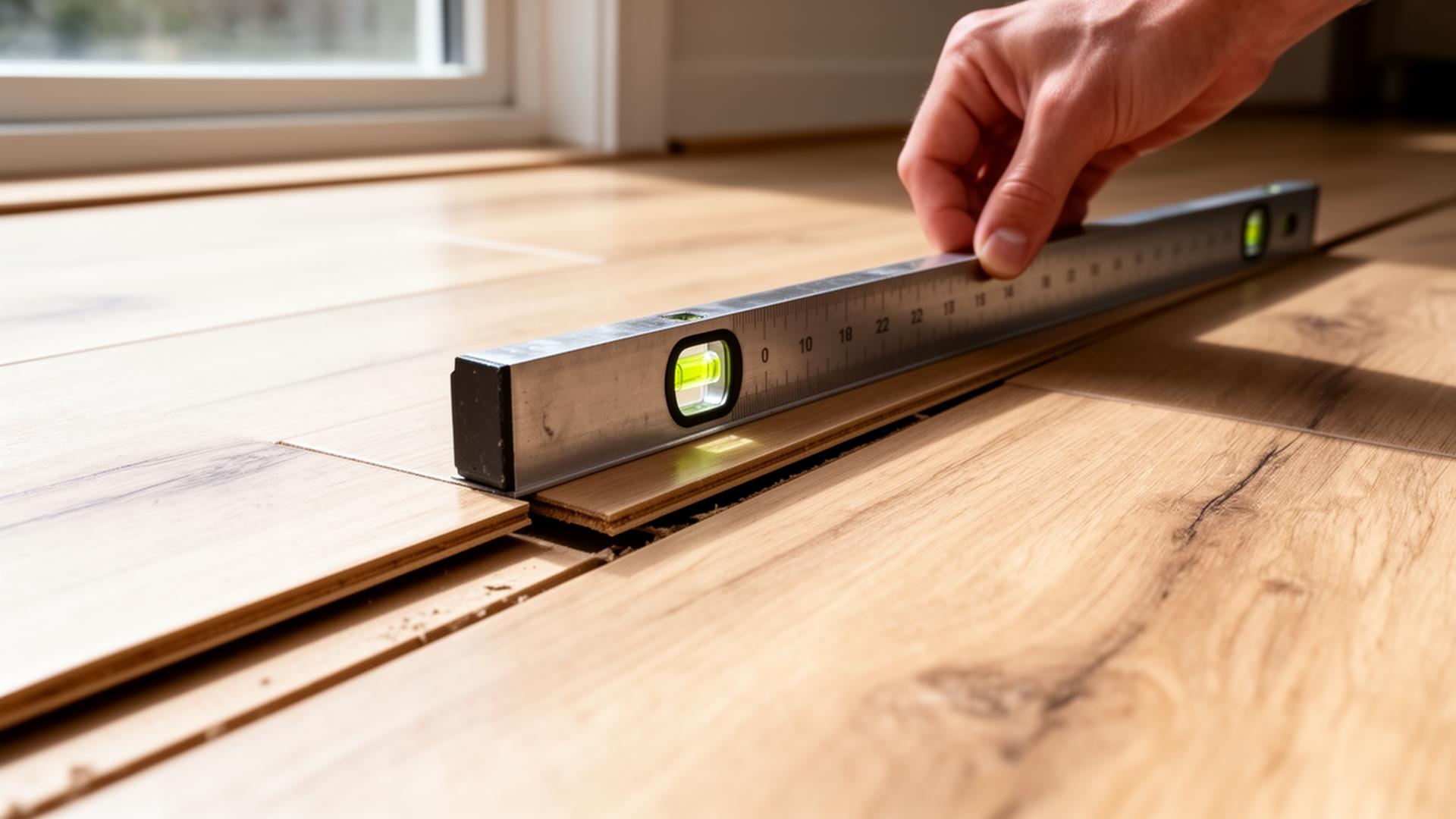
If your flooring installer did a bad job, you have three layers of recourse: the installer''s workmanship warranty, the product manufacturer''s warranty, and — for licensed contractors — your state''s contractor license board and bond. The most important thing you can do right now is document every defect with dated photos before you make final payment and put your concerns in writing to the contractor.
Here''s how to tell whether what you''re seeing is actually defective, and exactly what to do about it.
What "bad" actually looks like
These are the visible signs of a defective installation — workmanship failures, not material defects:
- Peaking or buckling — planks lifting up at the seams, usually because no expansion gap was left at the walls.
- Visible gaps between planks wider than a credit card edge, especially in the middle of the floor.
- Lippage — one plank sitting noticeably higher than the next. You can feel it with bare feet and confirm it with a straightedge.
- Telegraphed subfloor imperfections — bumps, dips, or seams from the subfloor showing through the new floor. This means subfloor prep was skipped (why subfloor prep matters).
- Hollow spots on a glue-down floor when you tap with a coin.
- Cracked baseboards or gouged drywall from rough demolition.
- Unsealed or missing transitions at thresholds and doorways.
- Repeating end-joints in adjacent rows (industry standard is at least 6"–8" of stagger).
- No expansion gap at walls — planks tight to the baseboard or wall.
What is not bad workmanship: slight seasonal gapping in winter, a faint hollow tap in one isolated spot on a floating floor, or intentional color variation between boxes (manufacturers shuffle planks on purpose for a natural look).

What normal post-install behavior looks like
Some quirks are normal and not your installer''s fault. LVP can creak slightly the first week as planks fully relax into place. Click-lock floating floors sound a little different from glue-down — softer, with a tiny bit of give underfoot. If you walked away from acclimation (see should I acclimate LVP before installation), you may also notice the floor feels slightly different in the first month as temperatures stabilize.
Document everything before you confront the installer
Before you say a word, build an evidence packet. You''ll need it whether the installer fixes the problem cheerfully or fights you on it.
- Take wide-angle photos of every affected room with daylight, so the defects are unmistakable.
- Lay a straightedge across lippage and photograph the gap underneath.
- Drop a marble on hollow spots and film the bounce.
- Write down dates, the installer''s and crew''s names, and quotes from any phone calls.
- Save your contract, invoice, deposit receipts, and the product SKU and lot number from a leftover box.
If the conversation goes south, this packet is your leverage.
The three layers of recourse
1. Workmanship warranty (the installer)
This covers how the floor was installed. Most reputable flooring contractors offer 1–2 years of workmanship warranty in writing. Read your contract — if a warranty is in there, the installer is legally obligated to inspect and remediate covered defects. The single best leverage point is before you make final payment, so always walk the job with the installer before paying the balance.
2. Product warranty (the manufacturer)
This covers defects in the planks themselves — delamination, finish failure, pattern misalignment from the factory. The catch: most manufacturer warranties are voided if the installation didn''t follow the manufacturer''s spec (skipped acclimation, wrong underlayment, exceeded subfloor tolerance, etc.). This is exactly why hiring an installer who actually follows spec matters — see common LVP installation mistakes.
3. License bond & state board
In California, the Contractors State License Board (CSLB) handles complaints against licensed contractors. Every licensed contractor carries a bond (currently $25,000), and you can file against the bond for proven workmanship defects. Unlicensed installers leave you with only small claims court — which is why "licensed and insured" is not optional.
What to say to your installer
Keep it factual, in writing (email or text — not phone), and calm. A script that works:
"Hi [name], I''m seeing [specific defects — e.g., peaking along the west wall in the living room, lippage at the kitchen threshold] that I''ve documented with photos dated [date]. Per the workmanship warranty in our contract, I''m asking you to inspect and remediate by [reasonable date — usually 2–3 weeks out]. I''ll hold the final payment of [amount] until the work is corrected. Please confirm a time."
That single message accomplishes three things: it names the defects specifically, it invokes the warranty in writing (creating a paper trail), and it makes clear that money is on the line. Most reputable installers will respond and come fix it — sometimes the same week.
When to walk away and hire someone else
If the installer refuses to inspect, blames you, blames the product without inspecting first, demands full payment before fixing anything, or simply ghosts you, you need to escalate.
- Hire a second flooring contractor to do a paid written inspection report — usually $150–$300. This is your independent expert evidence.
- File a CSLB complaint (if California) using the inspection report and your photo evidence.
- Pursue the contractor''s bond for the cost to remediate, or file in small claims court (up to $12,500 in California for individuals).
- Have the second contractor remediate the work so you can actually live in your home.
How to avoid this in the first place
The best fix is never needing one. Before hiring anyone:
- Verify their license on the CSLB website — don''t just take their word.
- Require proof of general liability and worker''s compensation insurance.
- Get a written workmanship warranty in the contract, with a clear duration. Verbal doesn''t count.
- Confirm in writing they''ll follow the manufacturer''s install spec (acclimation, underlayment, expansion gap, subfloor tolerance).
- Never pay 100% upfront. Standard structure is a deposit, a progress payment, and a balance due after walkthrough.
- Walk the job with the installer before they leave — feet on the floor, eyes on every room.
For a deeper checklist, see how to choose a flooring installer.
How TRU handles it
We''re a licensed, insured Southern California flooring contractor with a written 2-year workmanship warranty on every job. We follow the manufacturer''s install spec on every project — including acclimation and underlayment — so your product warranty stays intact. And if something is wrong after we leave, we come back and fix it. That''s built into how we price and how we schedule, so it''s never a fight. See our published installation rates or book a professional measurement visit to get started.
Know your flooring cost in 60 seconds.
Use our published rates to get an itemized estimate — no phone calls, no sales pressure.